How to Choose the Right Lighting for Small Spaces

Time:2026-10-09 Author:Sienna
0%

Small rooms often feel darker than their measurements suggest. A single ceiling fixture can leave a desk, mirror, or narrow corridor in visual shadow. Learning how to choose the right lighting for small spaces begins with observing how people actually use each corner, not simply counting square meters.

Energy efficiency matters, but comfort matters too. The U.S. Department of Energy reports that LED bulbs use at least 75% less energy and last up to 25 times longer than incandescent bulbs. That difference supports practical choices, such as replacing a hot 60-watt bulb with an efficient LED around 800 lumens. Still, brightness alone can create glare. The Illuminating Engineering Society recommends considering task needs, uniformity, color quality, and visual comfort when designing lighting. A 2700K to 3000K lamp may soften a bedroom, while a 3500K to 4000K source can improve focus near a compact workstation. These ranges are useful, not absolute.

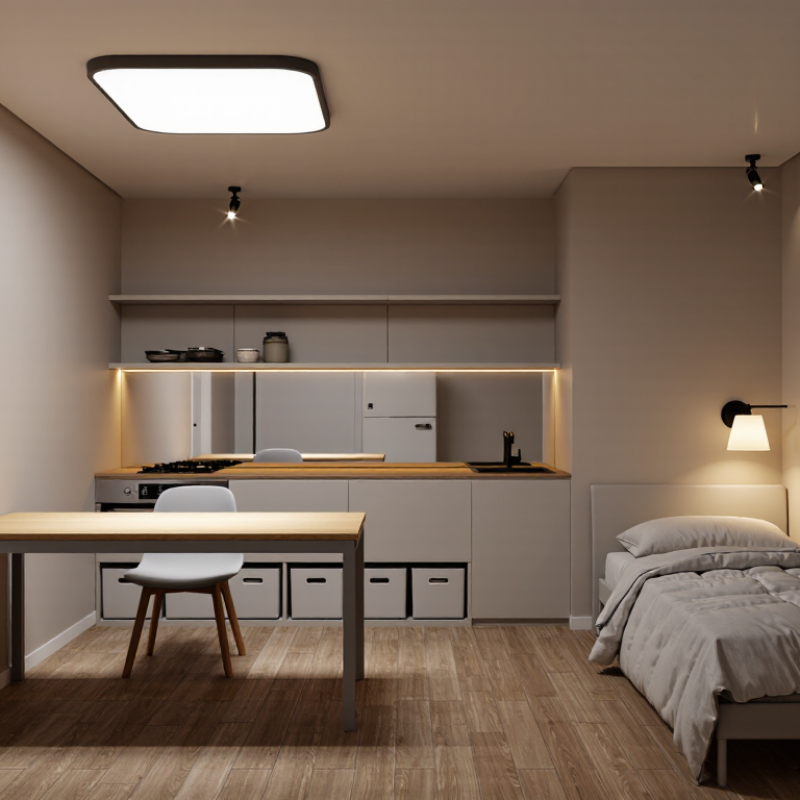
Layered lighting usually performs better than one oversized fixture. Try a slim ceiling light for general illumination, a wall sconce beside the bed, and a small under-cabinet strip near the counter. Reflective walls can spread light farther, but glossy surfaces may produce distracting reflections. I have found that adjustable fixtures solve some problems, though they can also expose poor placement. Measure the room, test the light at night, and notice where shadows collect. The best choice may not look impressive in a product photograph. It should make the room feel usable, calm, and slightly larger. Even professional guidance needs revision when real furniture, eye sensitivity, and daily habits enter the room.
How to Choose the Right Lighting for Small Spaces

Assess the Lighting Needs and Limitations of Your Small Space

Before choosing a fixture, map how the small space is actually used. A narrow study needs focused task light, while a hallway mainly needs safe, even visibility. Measure ceiling height, window direction, wall color, and available outlets. Dark walls absorb light, making the room feel smaller. Glossy surfaces can create distracting reflections.

Check daylight at morning, noon, and evening. It changes more than many planning sketches suggest. The International Energy Agency reports that lighting uses about 15% of global electricity. Efficient sources therefore matter, but efficiency alone cannot fix poor placement. The U.S. Department of Energy notes that light-emitting lamps can use at least 75% less energy and last much longer than incandescent lamps. Use those savings wisely.

Small rooms have hard limits. A low ceiling may reject a pendant, and one central fixture can leave a desk or mirror dim. Layer ambient, task, and accent lighting, but keep the controls simple. Measure brightness where work happens, not only near the ceiling. The Illuminating Engineering Society recommends evaluating illuminance for the activity, because comfort depends on the task. I would also check glare from screens and polished cabinets. This step is easy to miss. A modest lamp, placed closer to the work surface, may outperform a brighter ceiling fitting. Recheck the room after sunset; daytime assumptions can be misleading.

How to Choose the Right Lighting for Small Spaces

Assess the Lighting Needs and Limitations of Your Small Space

Small spaces benefit from lighting that matches the activity without creating excessive glare or heat. Use lower levels for circulation and relaxation, and brighter task lighting for reading, food preparation, and desk work. These typical illuminance targets are measured in lux (lumens per square metre).

Typical target illuminance: circulation 100 lux, living areas 200 lux, reading 300 lux, kitchen preparation 500 lux, and desk work 500 lux.

Choose Light Fixtures That Match the Room’s Size and Function

Choosing lighting for a small room starts with its dimensions and daily purpose. A compact ceiling fixture usually works better than a wide, low-hanging design. It leaves walking paths open and prevents the ceiling from feeling crowded. Measure the room before shopping, including ceiling height and furniture placement. Small mistakes become noticeable quickly.

A reading corner needs focused light, while a narrow hallway needs even illumination. Use a wall-mounted fixture beside a bed to free space on the bedside table. In a kitchen, place task lighting beneath cabinets rather than relying on one central bulb. Soft, warm light can make a living area feel comfortable, but it may reduce clarity at a desk. I prefer adjustable fixtures when one room serves several purposes. They provide flexibility without adding extra objects.

Watch the shadows.

Glare is another common problem. A bare bulb above eye level can feel harsh, especially in a small room with pale walls. Diffused shades soften the light, while directional fixtures highlight shelves, artwork, or work surfaces. Check the fixture’s scale against nearby furniture, not just the room’s floor area. I once chose a light that looked modest in a store but overwhelmed a narrow entryway. That experience changed my approach: I now use cardboard cutouts to test proportions first. It is not perfectly precise, but it exposes awkward sizes before installation. Consider energy use and bulb replacement access, too. A beautiful fixture becomes inconvenient when maintenance requires moving half the room.

Layer Ambient, Task, and Accent Lighting for Better Illumination

How to Choose the Right Lighting for Small Spaces

In a compact room, one bright ceiling fixture often creates glare above and shadows below. A better plan layers ambient, task, and accent lighting. The Illuminating Engineering Society commonly recommends about 300–500 lux for reading and desk work. Room surfaces and eyesight still change the result. I measure at the work surface, not beside the lamp. That small habit prevents false confidence.

Start with soft ambient light from a dimmable ceiling fixture, wall wash, or pale ceiling reflection. Keep illumination even, but not flat. Add task lighting beside a desk, mirror, or kitchen board. Aim the beam across the surface to reduce hand shadows.

Around 2700–3000 K can feel comfortable in living areas, while neutral white may support detailed work. The U.S. Department of Energy reports that residential LEDs use at least 75% less energy and last up to 25 times longer than incandescent lamps. Efficient sources make layered lighting easier to use daily.

Accent light gives a small room depth. Try a narrow beam on artwork, shelving, or a textured wall. Keep it dimmer than the task layer. A color rendering index of 90 or higher helps reveal skin, food, and material colors, though it is not a perfect guarantee.

I once overlit a narrow hallway and made it feel smaller. The mistake was treating brightness as spaciousness. Test after dark. Move one fixture. Question what still feels harsh.

Use Color Temperature and Bulb Brightness to Shape the Atmosphere

Small rooms need careful lighting because every bulb changes the perceived size and mood. Color temperature is a useful starting point. Warm light, around 2700K to 3000K, creates a softer atmosphere in bedrooms and reading corners. Neutral light, near 3500K to 4000K, can make kitchens and work areas feel cleaner without becoming harsh. Cooler light may appear brighter, but it can make a compact room feel sterile.

Brightness matters just as much as color. Choose bulbs by lumens, not watts. A small bedside lamp may need about 450 to 800 lumens, while a desk or kitchen task light may require more. I often place one brighter source near the work surface and use gentler lamps around it. This creates depth instead of flooding the entire room. Too much brightness is uncomfortable.

I once used cool bulbs throughout a narrow study, thinking they would improve concentration. The room looked sharp, but it felt unpleasant at night. I would change that choice now. Dimmers help, although they must match the bulb and fixture. Light direction also affects the result. Aim wall lights upward to make ceilings seem taller, and use warm accent light near shelves or curtains. Test bulbs after sunset. Daylight can hide problems.

Position and Control Lights to Maximize Space and Flexibility

In a small room, light position matters more than fixture size. Place ceiling lights near walls, not only above the center. This creates soft vertical brightness and makes boundaries feel less compressed. Add adjustable task lights beside a desk or bed. Their focused beams prevent the whole room from needing excessive brightness. The U.S. Department of Energy reports that LED lighting uses at least 75% less energy than incandescent lighting and lasts up to 25 times longer. Efficient lights support longer, more flexible use.

Control is equally important. Install separate switches for ambient, task, and accent lighting. Dimmers can shift a room from bright morning work to calm evening rest. Choose warm light for relaxation, but keep stronger, clearer light near mirrors and work surfaces. The Illuminating Engineering Society emphasizes layered lighting for visual comfort and functional performance. In practice, I often test light positions at night. A fixture that looks balanced during the day may create harsh shadows after sunset. My first layout is rarely perfect.

Tips: Use wall-mounted or track-adjustable fixtures to protect floor space. Aim one light toward a pale wall for gentle reflection. Keep cables short and hidden. Select bulbs with high color-rendering performance, especially near clothing or artwork. Do not over-light every corner. A small dark area can add depth, although this is easy to overdo. Try each setting for a week, then adjust the positions based on real routines.

FAQS

How should I choose a light fixture for a small room?

Measure the room, ceiling height, furniture, and walking paths before buying. Compact fixtures usually fit better. Avoid wide, low designs.

What lighting suits different room activities?

Use focused light for reading, desks, mirrors, and kitchen work. Hallways need even illumination. Living areas can use softer, warmer light.

How can layered lighting improve a compact room?

Combine ambient, task, and accent lighting. Ambient light fills the room, task light supports activities, and accent light adds depth.

How bright should reading or desk lighting be?

Around 300–500 lux often suits reading and desk work. Measure brightness on the work surface, not beside the lamp.

What color temperature works best indoors?

Warm light around 2700–3000 K feels comfortable in living areas. Neutral white can improve detail visibility at a desk.

How can I reduce glare and harsh shadows?

Choose diffused shades instead of exposed bulbs. Aim task light across the surface. Watch the shadows. Pale walls can intensify glare.

Where should lights be positioned in a small room?

Place some ceiling lights near walls for softer vertical brightness. Use wall-mounted or adjustable fixtures beside beds and desks.

Can controls make one room more flexible?

Use separate switches for ambient, task, and accent lights. Dimmers support bright work mornings and calmer evenings. My first layout is rarely perfect.

How can I test a fixture’s size before installation?

Cut a cardboard shape matching the fixture and place it near the furniture. It is not perfectly precise, but awkward proportions become visible.

What mistakes should I avoid when lighting a compact space?

Do not over-light every corner. Excess brightness can make a hallway feel smaller. Test after dark, then adjust one fixture at a time.

Conclusion

How to choose the right lighting for small spaces begins with understanding the room’s size, layout, natural light, and primary function. A compact area benefits from fixtures that fit its proportions without creating visual clutter, such as slim ceiling lights, wall-mounted options, or appropriately scaled lamps. Each choice should support how the space is used while leaving enough room for movement and storage.

A balanced lighting plan combines ambient lighting for general visibility, task lighting for focused activities, and accent lighting to add depth and visual interest. Color temperature and bulb brightness also influence the room’s atmosphere, with softer tones creating comfort and brighter light improving concentration. Finally, thoughtful placement, adjustable fixtures, dimmers, and convenient controls can make a small space feel more open, flexible, and comfortable throughout the day.

Sienna

Sienna

Sienna is a skilled marketing professional with a deep expertise in our company’s core products and services. With a passion for innovation and detail, she plays a pivotal role in crafting insightful blog posts that not only highlight the unique features of our offerings but also provide valuable......