Buying decorative lighting looks simple until the fixture arrives too large, too dim, or impossible to install. This guide, “7 Tips to Avoid Mistakes When Buying Decorative Lighting,” examines the decisions that affect comfort, safety, style, and long-term value. It asks the practical question: What mistakes to avoid when buying decorative lighting?
Lighting designer and author Randall Whitehead describes lighting as “the jewelry of architecture.” His observation explains why decorative fixtures deserve more than a quick style decision. A sculptural pendant can become the room’s focal point, but its beauty may fail if it hangs above eye level or casts harsh shadows across a dining table. A warm bulb can create intimacy. The wrong color temperature can make timber, fabric, and skin look dull.
Measure the room before browsing. Check ceiling height, mounting space, cable length, bulb compatibility, and cleaning access. Confirm the fixture’s dimensions against furniture, not only against an online photograph. Images can mislead.
Safety matters too. A qualified electrician should review wiring, load requirements, and installation conditions. Product labels, certifications, and manufacturer instructions deserve careful attention. Decorative does not mean risk-free.
Even experienced buyers miss details. Sometimes, the most attractive fixture performs poorly in daily use. That is worth admitting. A beautiful lamp that causes glare or demands frequent maintenance may become frustrating within weeks.
The following seven tips focus on real buying situations, including scale, brightness, materials, energy use, placement, installation, and after-sales support. Small checks prevent expensive disappointment. Style matters, but performance decides whether the light truly belongs in your home.
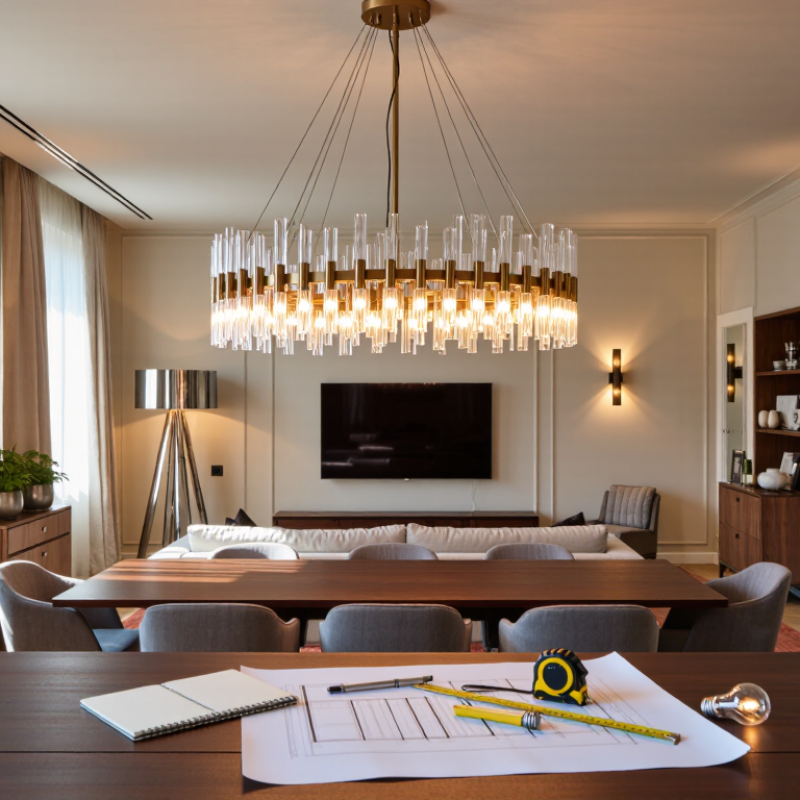
Before choosing decorative lighting, define what the room must help you do. A dining area may need flattering ambient light and focused illumination over the table. A reading corner needs controlled brightness, reduced glare, and an accessible switch. Write these goals down. Vague intentions often create expensive mistakes.
Measure the room, furniture, ceiling height, and walking paths. Then mark the table, sofa, mirrors, and artwork on a simple floor plan. The fixture should support the layout, not compete with it. I once selected a beautiful pendant without checking a cabinet door. It blocked the door when opened. My first sketch was wrong. Measure twice.
Consider how light changes throughout the day. A dark hallway may need wider, softer distribution, while a bedroom may benefit from warmer, lower-intensity illumination. Check the fixture’s dimensions, bulb compatibility, dimming requirements, and installation position. Decorative appeal cannot replace safe, practical performance. For bathrooms or covered outdoor areas, verify suitable moisture protection and follow local electrical requirements. A qualified electrician can assess wiring, mounting strength, and circuit capacity. Test the proposed height with a temporary paper template before drilling. It may feel unnecessary, but a few minutes can prevent a costly repair.
A realistic lighting budget begins with the complete project, not the fixture price. Include the fitting, electrician’s labor, ceiling repairs, switches, controls, delivery, and disposal. Installation can change the total dramatically when wiring is old or access is difficult. Ask for an itemized quotation before ordering anything.
Leave a contingency fund of 10% to 20%. It covers missing parts, unexpected wiring, or a second site visit. I once underestimated installation time because the ceiling looked accessible. It was not. That mistake changed the final cost.
Plan for operating expenses, too. The U.S. Department of Energy reports that lighting uses about 15% of household electricity. It also states that LED products use at least 75% less energy than incandescent lighting. ENERGY STAR reports that certified LED bulbs can last up to 25 times longer. These figures support a higher upfront budget when maintenance access is difficult.
Still, efficiency does not justify every expensive fixture. Compare wattage, rated life, replacement cost, and cleaning requirements. A decorative fitting with delicate glass may need frequent labor, especially in a tall stairwell. Include that service cost in your five-year estimate. Keep the spreadsheet simple, but review it twice. Prices, labor rates, and your own assumptions may be wrong. That is normal, but ignoring them is expensive.
Measure the room before buying decorative lighting. For a dining pendant, add the room’s length and width in feet. Use that number in inches as a starting diameter. A 10-by-12-foot room may suit a 22-inch fixture. It is not a rule. Leave enough clearance for sightlines and conversation. Match the style to nearby finishes, but avoid copying every detail. A calm contrast often looks more intentional. Materials matter too. Metal handles heat well, while fabric shades soften glare but collect dust.
Choose light output by lumens, not watts. The U.S. Department of Energy reports that LED lighting uses at least 75% less energy than incandescent lighting and can last up to 25 times longer. Source: DOE Energy Saver, “LED Lighting.” Still, efficient light can feel harsh. Look for a high color-rendering index, especially in kitchens, dining areas, and dressing spaces. Use warm white light for relaxed rooms, then add task lighting where reading or food preparation happens. Dimmers are valuable. Very bright is not always better.
Check the fixture’s total lumen output, dimmer compatibility, and safety listing before purchase. The IES Lighting Handbook supports layered lighting rather than relying on one central source. That approach reduces dark corners and reflected glare. I sometimes underestimate ceiling height; a beautiful pendant can quickly become an obstacle. Review the mounting dimensions twice. Also inspect replacement access, cleaning needs, and material samples under daylight. Online photos can mislead.
Choose the right size, style, materials, and light output by matching the fixture to the room’s typical illuminance needs. The ranges below are common residential lighting targets; actual requirements vary with room size, surface colors, task complexity, and personal preference.
Tip: Decorative fixtures should provide suitable ambient or task lighting without overpowering the room. Check lumen output, color temperature, beam spread, dimensions, materials, and installation height before buying.
Decorative lighting can look simple, but electrical details deserve careful attention. Before buying, check the fixture’s voltage, frequency, and maximum wattage. Confirm they match your home’s electrical supply. A fixture rated for another system may flicker, overheat, or fail early. Do not assume an adapter solves every compatibility problem. Ask a qualified electrician when the specifications seem unclear.
Safety markings matter. Look for recognized testing information and clear installation instructions. Inspect the socket type, insulation, wire condition, and included hardware. Avoid products with loose connections or exposed conductors. Heat can damage nearby paint, fabric, and wood. For bathrooms, kitchens, or outdoor areas, verify the correct moisture rating. I once underestimated the heat from a small pendant. That was careless.
Installation requirements can change the purchase decision. Confirm that the ceiling box can support the fixture’s weight. Heavy pendants may need reinforced mounting points. Measure the cable length before installation, especially in tall rooms. Keep the instructions for future maintenance. Turn off power at the circuit breaker, not only at the wall switch. If the wiring colors or connections are unfamiliar, stop and call a licensed professional. Local electrical rules may require specific grounding or inspection procedures. A second check is worthwhile.
When buying decorative lighting, compare build quality before admiring the finish. Hold the fixture gently and check for loose joints, uneven coatings, thin metal, or rough edges. A well-made fitting should feel stable, not merely attractive in a showroom. Inspect the socket, wiring, mounting plate, and heat ventilation. These small details often reveal future maintenance problems.
Read the warranty carefully. Does it cover the complete fixture, electrical components, labor, and shipping? Check the coverage period and exclusions, especially for fading, moisture, or installation errors. Keep the receipt and installation records. They may become important later. I once focused too much on appearance and overlooked a short warranty. That was not a smart decision.
Compare energy use using lumens, watts, and estimated yearly operating costs. A lower wattage is not always better if the light output is weak. Check whether the light source is replaceable, dimmable, and compatible with your controls. Energy efficiency matters, but so does repairability. Consider cleaning, replacement parts, color stability, and expected service life. A cheaper fixture may cost more after repeated repairs or difficult installation. Look beyond today’s price. Long-term value deserves more attention than it usually receives.
| Tip | What to Check | Recommended Benchmark | Warning Sign | Why It Matters | Long-Term Value Indicator |
|---|---|---|---|---|---|
| 1. Verify light quality | Color Rendering Index (CRI) and color consistency | CRI 80+ for general areas; CRI 90+ for dining rooms, bedrooms, artwork, and vanity lighting | No CRI rating or visibly uneven color between fixtures | Higher CRI makes colors appear more natural and reduces the risk of replacing unsuitable fixtures | Better visual comfort and fewer replacement or return costs |
| 2. Match brightness to the room | Lumens, beam angle, and the room’s intended use | Approximately 10–20 lumens per square foot for ambient residential lighting, adjusted for room function and fixture placement | Only wattage is listed, with no lumen output or beam information | Wattage measures energy consumption, not the amount or distribution of light | Correct brightness avoids buying extra fixtures or adding costly modifications |
| 3. Choose an appropriate color temperature | Kelvin rating and whether the light source is dimmable | 2700–3000K for warm residential ambience; 3000–4000K for kitchens, offices, and task areas | Unspecified Kelvin rating, visible flicker, or dimming compatibility that is not stated | Color temperature strongly affects atmosphere, perceived cleanliness, and comfort | A suitable, flicker-free, dimmable fixture remains useful when décor or room functions change |
| 4. Compare energy use | Input wattage, efficacy, and estimated annual operating cost | LED efficacy of about 80–120 lumens per watt; use the actual wattage rather than an “equivalent” incandescent rating | High wattage for a low lumen output or no electrical specifications | A 10W LED used 3 hours daily consumes about 10.95 kWh per year, before local electricity rates | Lower operating costs and less heat output over the fixture’s service life |
| 5. Read the warranty carefully | Warranty duration, covered parts, labor, exclusions, and claim process | A clearly written 3–5 year warranty for integrated LED fixtures; longer coverage can be valuable for difficult-to-access installations | “Limited lifetime” wording without a defined period, proof-of-purchase requirements, or coverage details | Replacing a ceiling-mounted fixture can cost more in labor than the product itself | A transferable or straightforward warranty reduces financial risk if LEDs, drivers, or finishes fail early |
| 6. Assess construction and safety | Materials, heat management, mounting hardware, electrical certification, and environmental rating | Metal or heat-resistant construction, secure mounting, recognized electrical safety certification, and an appropriate IP rating for damp locations | Loose wiring, sharp unfinished edges, poor strain relief, or an indoor-only rating for bathroom or outdoor use | Good thermal and electrical design supports safe operation and stable light output | Fewer safety concerns, premature failures, and installation-related expenses |
| 7. Calculate total cost of ownership | Purchase price, installation, electricity, maintenance, and expected service life | Use: total cost = purchase price + installation + energy cost + replacement cost over the planned ownership period | Choosing the lowest purchase price without considering inaccessible lamps, special bulbs, or installation labor | A lower-priced fixture can become more expensive if it requires frequent lamp changes or difficult servicing | Prioritize reliable performance, replaceable components where practical, and accessible maintenance |
Note: Benchmarks are general residential guidelines. Actual lighting requirements, energy costs, electrical standards, and installation conditions vary by location and project.
Write down the room’s main tasks. A dining area may need soft ambient light and focused table lighting. A reading corner needs controlled brightness and low glare. Keep the switch easy to reach.
Measure the room, ceiling height, furniture, and walking paths. Mark tables, sofas, mirrors, and artwork on a simple floor plan. Measure twice. A fixture must support movement, not block it.
Check cabinet doors, drawers, and nearby pathways. I once chose a pendant that blocked a cabinet door. The fixture looked beautiful. My sketch was wrong.
Observe the room in the morning, afternoon, and evening. Dark hallways may need broad, soft distribution. Bedrooms often suit warmer, lower-intensity light. The same fixture can feel different at sunset.
Confirm the fixture’s voltage, frequency, and maximum wattage. Match them with your home’s electrical supply. Check bulb compatibility and dimming requirements. Do not assume an adapter fixes every problem.
Look for recognized testing information and clear installation instructions. Inspect the socket, insulation, wires, and included mounting hardware. Avoid loose connections or exposed conductors. Small flaws matter.
Verify suitable moisture protection for bathrooms, kitchens, and covered outdoor spaces. Follow local electrical requirements. Water and electricity need careful separation. Ask a qualified electrician when details are unclear.
Ask a licensed professional about wiring, grounding, mounting strength, and circuit capacity. Heavy fixtures may need reinforced ceiling supports. Turn power off at the circuit breaker. A wall switch alone is not enough.
Use a temporary paper template to test its height and width. Check doors, heads, furniture, and walking space. It may feel unnecessary. A few minutes can prevent expensive repairs.
Buying decorative lighting can transform a room, but careful planning helps prevent costly and frustrating mistakes. What mistakes to avoid when buying decorative lighting? Start by defining the room’s purpose, layout, and functional lighting goals before choosing a fixture. Set a realistic budget that includes the purchase price, installation, replacement parts, and future maintenance. Then select a suitable size, style, material, and brightness level so the light complements the space without overwhelming it or creating glare.
Before making a final decision, confirm that the fixture is compatible with your electrical system, suitable for the installation location, and compliant with relevant safety requirements. Compare construction quality, warranty coverage, energy consumption, and expected lifespan rather than focusing only on appearance or initial price. A well-chosen fixture should provide reliable illumination, match the room’s design, and deliver lasting value. Taking time to review these factors can help you avoid poor fit, unexpected expenses, difficult installation, and disappointing performance.

Bright Light Bulb