Choosing better lighting can reduce energy use, replacement costs, and household waste. But the transition is not as simple as replacing every bulb with the brightest LED. This guide, “7 Tips for Eco Friendly Alternatives to Traditional Bulbs,” examines practical choices for kitchens, bedrooms, offices, and outdoor fixtures.
What are eco-friendly alternatives to traditional bulbs? The strongest options include LED bulbs, compact fluorescent lamps, halogen alternatives, and solar-powered outdoor lights. LEDs usually lead the comparison. The U.S. Department of Energy reports that residential LEDs use at least 75% less energy than incandescent bulbs. They can also last up to 25 times longer. ENERGY STAR adds that certified lighting can reduce electricity use and maintenance needs over time. Small changes matter.
Noah Horowitz, an energy-efficiency expert at the Natural Resources Defense Council, states, “LEDs use at least 75 percent less energy and last 25 times longer than incandescent bulbs.” That advantage is clear, but it is not perfect. LEDs contain electronic components and require responsible disposal. Some low-quality models flicker, create harsh glare, or fail early. I learned this after installing an inexpensive bulb above a workbench. Its cold light made the space uncomfortable. Color temperature matters. So does durability. The following tips balance energy performance, comfort, purchasing cost, and end-of-life responsibility.
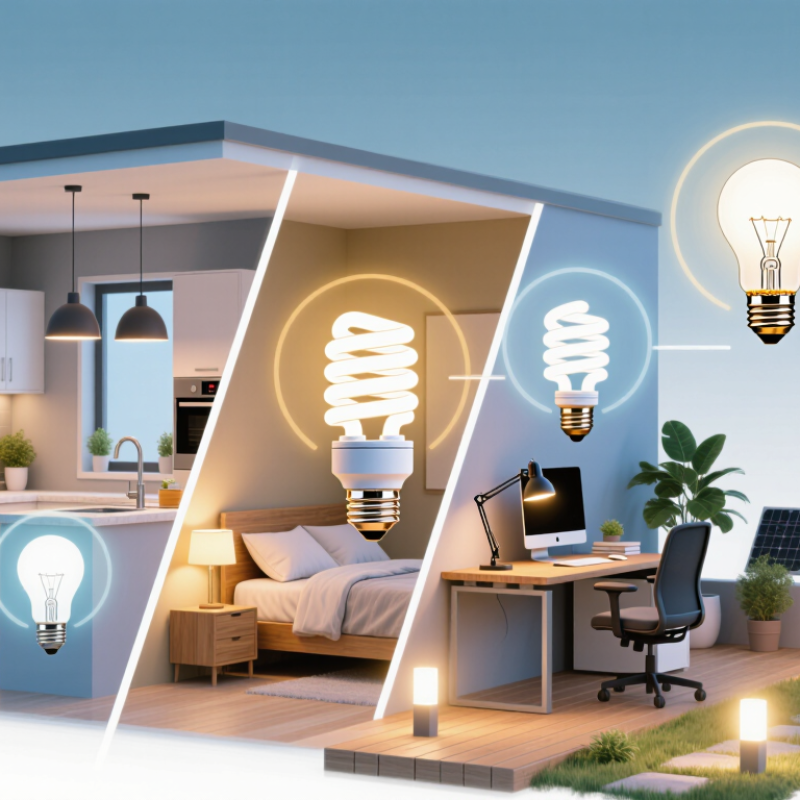
Choose LED bulbs for rooms used every day. They consume far less electricity than incandescent bulbs and usually last much longer. That means fewer replacements, less packaging waste, and lower household emissions over time.
Compare lumens, not watts. Lumens show brightness, while watts show energy use. A warm, 2700K bulb can create a comfortable bedroom without wasting power.
I once bought a bright, cool bulb for a hallway. It felt harsh and stayed unused.
Check whether an LED works with your dimmer. Some older controls cause flickering or shorten bulb life. For outdoor paths, consider solar-powered lights with rechargeable batteries. They can reduce wiring needs and use daylight as their energy source.
Motion sensors and timers also prevent lights from shining across empty rooms. In places where LEDs are unsuitable, compact fluorescent bulbs may still use less energy than incandescent lamps.
However, they contain a small amount of mercury and require careful recycling. Never place them in ordinary household waste.
Reuse fixtures when possible. Replacing only the bulb reduces material demand and saves money.
Not every eco-friendly choice is perfect. Manufacturing, transport, and disposal still create impacts, so select durable bulbs and keep them working for years.
Choosing an eco-friendly bulb starts with comparing performance, materials, and everyday habits. I have tested LEDs in kitchens, bedrooms, and outdoor fixtures, and their low energy use was immediately noticeable. They produce bright light with little heat and often last for many years. Check lumens rather than watts, because lumens measure brightness more accurately.
CFLs can use less electricity than traditional incandescent bulbs, but they need careful recycling because they contain a small amount of mercury. Their cooler start-up can feel inconvenient in a hallway. Halogen bulbs provide warm, clear light, yet they consume more energy and become extremely hot. Keep them away from curtains and enclosed fixtures. Confirm dimmer compatibility before installation. I once ignored this detail, and the bulb flickered constantly.
Emerging options include organic light-emitting panels, low-voltage systems, and lighting controlled by occupancy sensors. These designs may reduce wasted electricity, although their long-term repairability is not always clear. Look for efficient light output, replaceable parts, and transparent disposal guidance. Consider color temperature too: warm white suits a bedroom, while neutral white helps with detailed work. Use timers in rarely occupied spaces. Measure the fixture first. A smaller bulb is not automatically greener if it requires earlier replacement. Availability also varies by region, so claims deserve careful checking.
Lighting choices work best when each room has a clear purpose. After testing bulbs in kitchens and bedrooms, I learned that brightness matters more than wattage. Choose lumens, not watts, when comparing light output. A kitchen may need 1,000–2,000 total lumens for safe food preparation. A hallway can feel comfortable with much less. Use several smaller bulbs when one harsh bulb creates shadows. It feels softer.
Match color temperature to the room’s mood. Cool white light can help a laundry area or work desk feel alert. Warm white light usually suits bedrooms, dining spaces, and living rooms. Check the fixture size before buying. A bulb that touches a shade may trap heat and shorten its life. Dimmable models can adapt to reading, cleaning, and relaxing, but the bulb and dimmer must be compatible.
Energy efficiency still deserves careful attention. LED bulbs generally use far less electricity than traditional incandescent bulbs and last much longer. Look for clear lumen, wattage, lifespan, and efficiency information on the package. In frequently used rooms, efficient bulbs can reduce running costs noticeably. Recycle old bulbs through an approved local collection service. I once chose a very bright bulb for a small study, and it caused glare instead of comfort. My mistake was treating brightness as quality. Measure the room’s needs, then adjust after living with the light.
This chart compares estimated annual electricity use for common room lighting needs. The calculation assumes one bulb operates for 3 hours per day over 365 days. LED wattages are approximate equivalents for the listed brightness levels.
Brightness guide: Bedrooms typically need about 800 lumens, living rooms about 1,500 lumens, kitchens about 1,600 lumens, bathrooms about 1,100 lumens, and workspaces about 1,100 lumens. LEDs provide comparable brightness while using substantially less electricity than incandescent bulbs.
Seven Practical Ways to Reduce Energy Use with Sustainable Lighting
Tip 1: Replace incandescent bulbs with LEDs in rooms used every day. The U.S. Department of Energy reports that LEDs use at least 75% less energy and last up to 25 times longer. Tip 2: Match brightness to the task. A dimmer bulb often works better than an oversized one above a small desk. Tip 3: Choose warm, efficient lighting for bedrooms and living areas. It can reduce glare without sacrificing comfort.
Tip 4: Install motion sensors in hallways, storage rooms, and bathrooms. They prevent lights from burning through empty hours. Tip 5: Use timers or daylight sensors outdoors. The International Energy Agency estimates that lighting consumes about 15% of global electricity, so small controls can matter at scale. Tip 6: Clean dusty fixtures and shades twice a year. Dust blocks useful light, encouraging higher brightness settings. I have noticed this most in kitchens and workshops.
Tip 7: Compare lumens, not watts, when buying replacements. Lumens show light output, while watts show energy demand. Check the bulb’s operating temperature and disposal guidance, too. Sustainable choices are not always perfect. Some LEDs contain electronic components, and careless disposal creates avoidable waste. That needs attention. Also, a smart control system may save little if its standby use is high. Measure monthly electricity use when possible, then adjust one change at a time.
| Tip | Practical Lighting Choice | Typical Power for Similar 800-Lumen Light | Estimated Annual Energy Use | Energy Reduction vs. 60 W Incandescent | Typical Rated Life | Sustainability Benefit |
|---|---|---|---|---|---|---|
| 1. Replace incandescent bulbs | Use a household LED bulb instead of a traditional incandescent bulb. | LED: approximately 8–10 W | 8.8–11.0 kWh per year | Approximately 83%–87% less energy | 15,000–25,000 hours | Lower electricity demand and fewer replacements over time. |
| 2. Choose efficient halogen replacements | When an LED is unsuitable, select an efficient halogen bulb rather than a standard incandescent bulb. | Halogen: approximately 43–52 W | 47.1–57.0 kWh per year | Approximately 13%–28% less energy | 1,000–2,000 hours | Provides a modest energy improvement while using familiar dimming behavior. |
| 3. Use compact fluorescent lamps carefully | Use a compact fluorescent lamp where long operating periods justify its higher efficiency. | CFL: approximately 13–15 W | 14.2–16.4 kWh per year | Approximately 75%–78% less energy | 8,000–10,000 hours | Uses substantially less electricity, but requires proper recycling because it contains a small amount of mercury. |
| 4. Install LED task lighting | Use a focused LED desk lamp or under-cabinet light instead of illuminating an entire room. | LED task light: approximately 4–8 W | 4.4–8.8 kWh per year | Approximately 87%–93% less energy | 15,000–25,000 hours | Reduces wasted light by directing illumination only where it is needed. |
| 5. Add dimmable LED lighting | Use dimmable LEDs with compatible controls and lower brightness when full output is unnecessary. | Approximately 4–10 W at common dimmed settings | 4.4–11.0 kWh per year | Approximately 83%–93% less energy | 15,000–25,000 hours | Combines LED efficiency with adjustable light levels, reducing unnecessary electricity use. |
| 6. Use daylight and occupancy controls | Place work areas near windows and use timers, occupancy sensors, or smart controls to switch lights off automatically. | Any efficient bulb; operating time can be reduced by about 20%–40% | Depends on usage; 20%–40% fewer operating hours | Additional 20%–40% operating-energy reduction | Does not change bulb life rating | Prevents lights from running in empty or already-bright spaces. |
| 7. Dispose of bulbs responsibly | Recycle CFLs and follow local instructions for LEDs, halogen bulbs, and other lamp types. | Energy savings depend on the replacement selected | Not applicable | Supports material recovery and safer waste handling | Varies by bulb type | Keeps mercury-containing CFLs and recoverable materials out of ordinary household waste. |
Eco-friendly bulbs save energy, but safe handling matters just as much. Choose an LED or another efficient bulb with the correct brightness and base. Check the fixture’s maximum wattage before buying. Switch off the power and let the old bulb cool completely. Dry hands reduce the risk of slipping. Never force a bulb into a socket. A loose or damaged socket needs professional attention.
Keep bulbs clean with a dry, soft cloth after switching off the power. Dust can trap heat, especially inside enclosed fixtures. Check for flickering, buzzing, dark spots, or unusual warmth. These signs may indicate a poor connection or an incompatible fixture. Replace damaged bulbs promptly. I once focused only on energy savings and overlooked ventilation; that was a useful reminder. Efficiency does not replace basic safety. Use the manufacturer’s fitting instructions, even when the installation looks simple.
Dispose of bulbs according to local waste guidance. LEDs usually contain electronic components and may belong at an e-waste collection point. Some older efficient bulbs contain small amounts of mercury and should never be broken or placed casually in household trash. Store a failed bulb in a rigid container until disposal. If one breaks, keep people away, avoid sweeping or vacuuming immediately, and follow local cleanup advice. Recycling rules vary. Check them before carrying bulbs to a collection site.
LEDs use at least 75% less energy and can last up to 25 times longer. That difference matters.
No. Match lumens to the task. A small desk may need less light than a large kitchen. Too much brightness can create glare and waste energy.
Warm, efficient lighting usually feels more comfortable in these spaces. It can reduce glare without making the room feel harsh.
Install them in hallways, storage rooms, and bathrooms. They switch lights off after empty periods. Check their settings occasionally.
Use timers or daylight sensors for outdoor fixtures. They prevent lights from staying on through bright mornings or empty nights.
Lumens show light output. Watts show energy demand. Compare both when replacing a bulb, not only the package brightness.
Turn off the power, then clean bulbs and shades with a dry, soft cloth. Do this twice yearly. Dust blocks useful light and traps heat inside enclosed fixtures.
Check the fixture’s maximum wattage and the bulb’s base. Let the old bulb cool completely. Never force a bulb into its socket. Stop if the socket is damaged.
Follow local waste guidance. LEDs may need electronic-waste collection. Some older efficient bulbs contain mercury and require special handling. Store failed bulbs in a rigid container.
Not always. Standby power may reduce the expected savings. Measure monthly electricity use and change one setting at a time. My first estimate might be wrong.
What are eco-friendly alternatives to traditional bulbs? Energy-saving LEDs, compact fluorescent lamps, improved halogen bulbs, and emerging options such as smart or solar-powered lighting can reduce electricity use and environmental impact. LEDs generally offer long service life and high efficiency, while CFLs use less energy than older incandescent bulbs but require careful handling because of their contents. Halogen bulbs may provide bright, familiar light, although they are usually less efficient than LEDs. Choosing the right bulb also depends on room function, desired brightness, color temperature, and operating hours.
This guide presents seven practical ways to create more sustainable lighting habits: select efficient bulbs, match brightness to actual needs, use timers or sensors, turn lights off when they are unnecessary, make better use of daylight, keep fixtures clean, and replace damaged bulbs promptly. Safe installation and regular maintenance help prevent accidents and extend performance. When bulbs reach the end of their useful life, dispose of them responsibly according to local recycling or waste-collection guidance, especially for fluorescent types.

Bright Light Bulb